Supine Yoga Pose
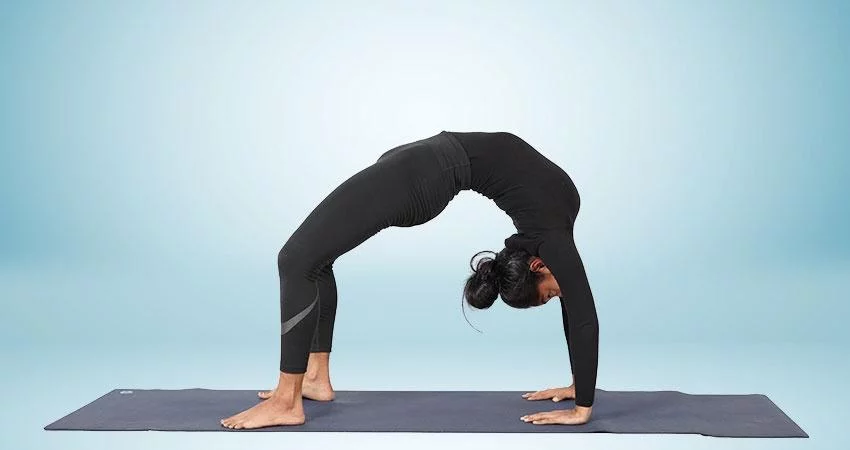
Wheel Pose
Chakrasana
Chakrasana (Wheel Pose) brings the body into a curved shape resembling a wheel. This intermediate-level asana belongs to the back-bend family and provides relaxation while boosting confidence. The pose engages the entire body — arms, shoulders, chest, lower back, legs, feet, and neck — requiring significant strength. Practitioners experience a sense of optimism when holding the full posture, and the asana supports spiritual advancement, though it demands trust in one's instructor and considerable practice.
DifficultyIntermediate
CategorySupine Yoga Pose
ChakraAddresses all chakras
 Intermediate
How to do it
Steps to Perform Wheel Pose
- 1Lie down on your back.
- 2Fold the legs, with the heels positioned close to the buttocks.
- 3Place the palms under the shoulders with the fingers pointing toward the feet.
- 4Inhale and lift the waist upward.
- 5Elevate the chest and head using the strength of the hands.
- 6Continue breathing while maintaining the pose.
- 7Slowly exhale, bend the elbows, and gradually lower the shoulders, middle back, lower back, and buttocks in sequence.
Why practise it
Benefits
- Strengthens the legs, arms, wrists, abdomen, buttocks, spine, shoulder blades, lungs, and chest.
- Beneficial to the nerves and the digestive, respiratory, cardiovascular, and glandular systems.
- Relieves various gynaecological disorders.
- Helps with infertility, asthma, and osteoporosis, and relieves stress.
For beginners
Tips
- Prioritise building body flexibility before attempting this pose.
- Practise foundational back bends: Bhujangasana, Setu Bandhasana (Bridge Pose), Dhanurasana (Bow Pose), and Ustrasana.
- Use props including blocks and wheels before attempting the full pose.
- Use wall support as an assistance tool.
Watch Out For
- Slipped disc.
- Wrist injuries.
- Vertigo or dizziness.
- High blood pressure.
- Neck injuries.
- Carpal tunnel syndrome.
- Back problems.
- Shoulder injuries.
- Headaches.
- Pregnancy.
- Any active illness.
Go further
Variations
- Eka Pada Chakrasana (one-legged variation).
- Chakrasana with the legs stretched.
- Chakrasana on a hammock.
- Chakrasana with blocks positioned between the legs.
Begin where you are.
Whether you want to teach, heal a specific thing, or simply move and breathe with people once a week — there's a door at Bodhi for that.