Standing Yoga Pose
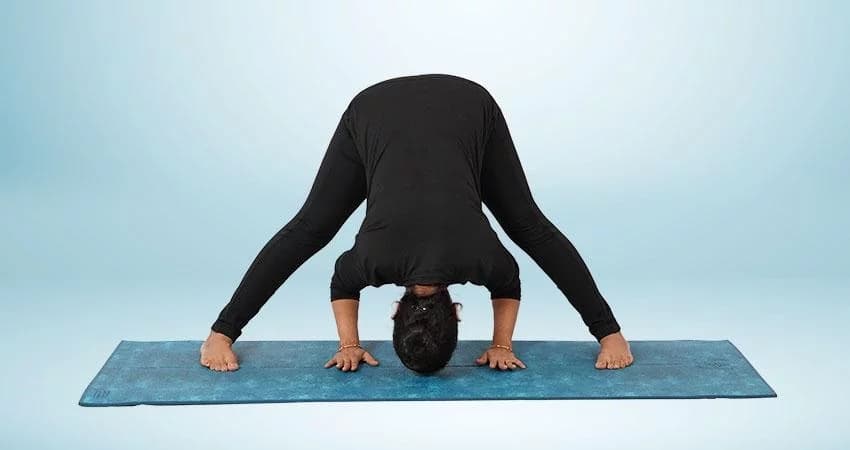
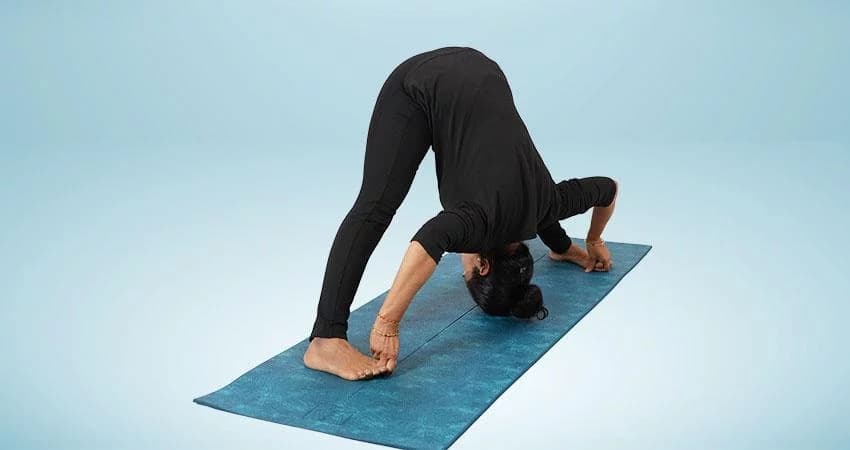
Wide Legged Forward Bend A
Prasaritta Padottanasana A
Prasaritta Padottanasana A is an intermediate-level forward bend that stimulates the muladhara, svadhisthana, and manipura chakras. Opening these chakras increases stability, productivity, and self-acceptance. Though demanding initially, it becomes a resting pose with practice. This asana serves as preparation for the Headstand and can substitute for Sirsasana, producing a calming effect while cooling the brain.
DifficultyIntermediate
CategoryStanding Yoga Pose
ChakraMuladhara, Svadhisthana & Manipura Chakra
 Intermediate
How to do it
Steps to Perform Wide Legged Forward Bend A
- 1Stand on the side of the mat in Tadasana, then stretch the legs wide apart.
- 2Point the toes forward with the heels back.
- 3Inhale and stretch the hands overhead; exhale while bending from the lower back, placing the palms on the mat between the feet at three equal distances.
- 4Bend the elbows to place the crown of the head on the mat.
- 5Continue breathing while holding; avoid straining the neck.
- 6Inhale slowly to come upright; exhale and relax the hands, bringing the legs together.
Why practise it
Benefits
- Stretches the hamstrings, calves, glutes, and lower back.
- Opens the hips.
- Stretches the shoulders, chest, and spine.
- Relaxes the body and calms the mind.
- Beneficial for the lower abdomen.
For beginners
Tips
- Create foot balance on the mat.
- Distribute weight evenly between the toes and heels for spinal relief.
- Emphasise chest opening and shoulder broadening over depth.
- Practise hamstring work; Sun Salutation is recommended.
- Practise all Prasaritta Padottanasana variations.
Watch Out For
- Avoid if experiencing leg, neck, arm, or shoulder injuries.
- Those with lower-back problems should modify depth according to comfort.
- High or low blood pressure patients should avoid this pose.
Go further
Variations
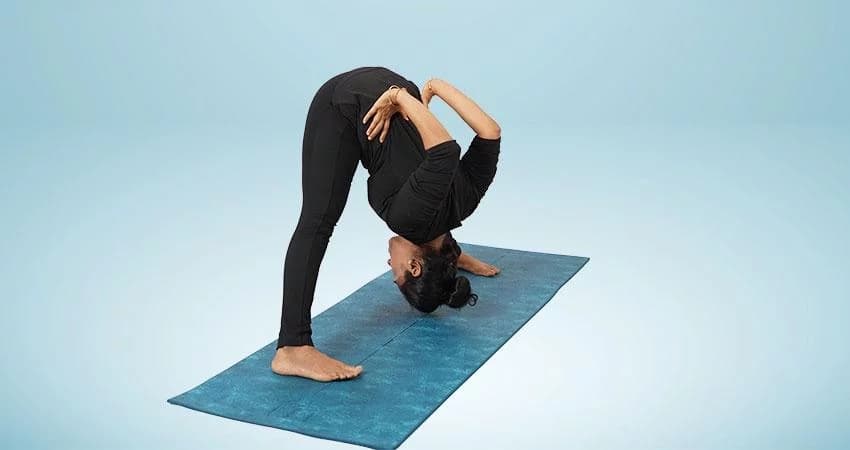
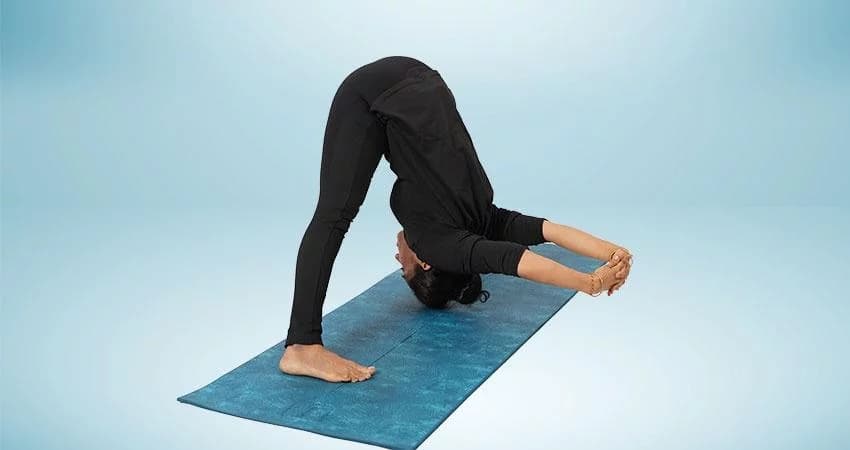
- Prasaritta Padottanasana B, C, and D (different arm positions).
- Wall-supported variations.
Keep Exploring
Related Poses
Begin where you are.
Whether you want to teach, heal a specific thing, or simply move and breathe with people once a week — there's a door at Bodhi for that.